
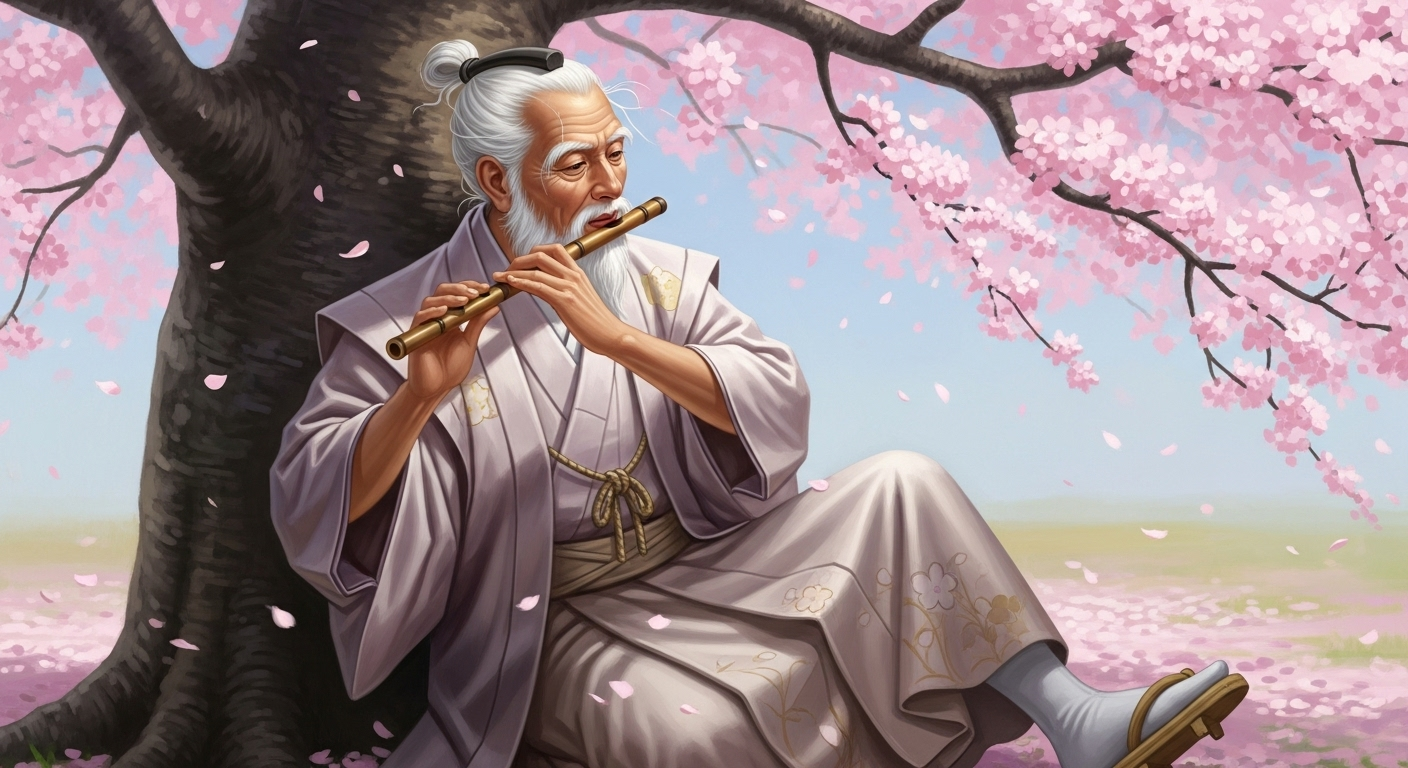
Bamboo flute focus meditation is one of the most natural and nervous-system-friendly ways to train one-point awareness in meditation. Instead of forcing silence or controlling the breath, this method allows your attention to settle gently into sound. Moreover, because the bamboo flute is breath-driven and organic, it meets the body where it already feels safe—inside rhythm, vibration, and flow.
In today’s overstimulated world, many people struggle with racing thoughts, emotional overwhelm, and nervous system fatigue. However, meditation doesn’t have to feel like another task to master. In fact, true stillness arises not by effort, but by regulation. Sound becomes a bridge between the restless mind and the settling body. The bamboo flute, with its slow phrasing and warm tonal texture, offers an ideal anchor for that bridge.
Unlike methods that rely on breath control or imagery, bamboo flute focus meditation works directly through the auditory system. Therefore, it is especially supportive for people with anxiety, trauma history, insomnia, or difficulty concentrating. Instead of “trying” to focus, you simply listen. Over time, the nervous system learns that stillness is safe.
In this guide, we will explore how bamboo flute focus meditation works, why one-point focus is essential for emotional regulation, and how to apply this technique both in formal meditation and daily life. Additionally, you’ll learn how this method supports trauma recovery, mental clarity, and deep rest—without force or pressure.
What Is Bamboo Flute Focus Meditation and Why It Works
Bamboo flute focus meditation is a one-point concentration practice where attention rests on a single auditory object: the continuous, breath-shaped tone of the bamboo flute. Instead of scanning many sensations at once, the mind is gently invited to stay with one sound.
This matters because the nervous system is not designed to handle constant multi-channel input. When attention jumps from thought to sensation to emotion repeatedly, the brain remains in a mild stress response. However, when attention is unified, the nervous system downshifts naturally.
Moreover, sound is processed differently than visual input. The auditory system is directly connected to the vagus nerve, which plays a central role in regulating heart rate, digestion, emotional stability, and stress recovery. Therefore, slow flute tones stimulate the parasympathetic nervous system—your body’s natural “rest and restore” state.
In addition, bamboo flute sound carries micro-variations in breath pressure, pitch, and texture. These subtle fluctuations keep the mind gently engaged without overstimulating it. As a result, attention remains steady without becoming rigid.
Unlike mantra meditation, which activates verbal thinking, bamboo flute focus meditation quiets the language centers of the brain. Instead of repeating words, you receive sound. This receptive quality is particularly helpful for people who feel mentally exhausted.
Therefore, this technique is not just about focus—it is about teaching the nervous system how to feel safe in stillness.
Why One-Point Focus Is Essential for Nervous System Regulation
Bamboo flute focus meditation trains what is called one-point awareness. This means that attention remains primarily on one stable object rather than spreading across many sensations and thoughts.
From a neurological perspective, scattered attention keeps the brain in a problem-solving mode. However, when attention stabilizes, the prefrontal cortex (responsible for regulation and clarity) becomes more active, while the limbic system (emotion and threat detection) quiets down.
Moreover, one-point focus interrupts rumination. Rumination requires attention to repeatedly circle around the same thoughts. When attention rests fully on sound, the momentum of repetitive thinking weakens. Over time, the brain learns that it can release mental loops without force.
This is especially important for anxiety, where attention is constantly oriented toward future danger, and for trauma, where attention involuntarily revisits the past. Bamboo flute focus meditation gently trains the nervous system to rest in the present moment.
Additionally, one-point focus improves emotional containment. Instead of being flooded by multiple sensations at once, the mind anchors to something stable while emotions rise and fall in the background. This builds emotional resilience without suppression.
Therefore, bamboo flute focus meditation does not just train attention—it retrains safety at the nervous-system level.
Why the Bamboo Flute Is the Ideal Sound Anchor
Not all sounds have the same effect on the nervous system. Bamboo flute sound is uniquely effective because it contains five essential calming qualities:
- Breath-driven vibration – The sound mirrors human respiration, which automatically slows the body.
- Soft tone onset – No abrupt attacks, which prevents startle reflex activation.
- Low harmonic density – Prevents sensory overload.
- Natural pitch drift – Keeps the mind engaged without locking into rigid patterns.
- Spacious phrasing – Allows integration between notes.
Moreover, low bamboo flute tones resonate in the chest and abdomen, areas closely associated with grounding and safety. Consequently, the body experiences sound not only through hearing, but also through subtle vibration.
Unlike synthetic or digitally generated tones, bamboo flute sound feels “alive.” The nervous system responds better to natural acoustic variability than to mechanical precision. This is why many people feel calmer listening to wind, water, or flute rather than pure electronic tones.
In addition, the bamboo flute carries an emotional expressiveness similar to the human voice—but without language. Therefore, emotion can move without triggering thought narratives. This makes it especially powerful for emotional processing without mental overwhelm.
Ultimately, bamboo flute focus meditation works because the sound itself teaches safety through sensation. Read Why Low Bamboo Flute Tones Deliver a Strong Grounding Effect
How to Practice Bamboo Flute Focus Meditation (Step-by-Step)
This technique is simple, yet its effects deepen with consistency. You do not need advanced meditation experience.
Step 1: Choose the Right Sound
Select a bamboo flute track that is:
- Slow in tempo
- Without rhythm or percussion
- With long, sustained breath phrases
- With natural pauses between notes
Avoid fast melodies or layered music. The goal is to stabilize attention, not stimulate it.
Step 2: Prepare the Body
Sit or lie in a comfortable position. However:
- Keep the spine supported
- Relax the jaw and shoulders
- Allow the belly to rise naturally with breath
Physical safety must come first for mental stillness to follow.
Step 3: Place Your Attention on the Sound
Rest your awareness on:
- The center of the tone
- The moment breath enters the note
- The fade into silence
Let the sound be your entire field of meditation.
Step 4: Return Without Judgment
When thoughts arise—and they will—return gently to the flute. Do not analyze your distraction. Simply return.
This returning is not failure. It is the training itself.
Practice for 7–15 minutes daily. Over time, your system will associate this sound with regulation and stillness.
How Bamboo Flute Focus Meditation Supports Trauma and Anxiety Healing
Bamboo flute focus meditation works through pattern interruption and repatterning. Trauma keeps the nervous system in a state of hypervigilance. Anxiety keeps attention scanning for danger. This technique gently disrupts both patterns.
First, the breath-shaped sound signals safety. The nervous system recognizes slow breath as a biological cue that no immediate threat is present. This begins deactivation of the stress response.
Second, the predictable unpredictability of flute phrasing teaches tolerance for uncertainty. The mind does not need to control what comes next; it learns to receive.
Third, staying with sound builds distress tolerance. You learn that sensation can rise and fall without escape. This skill transfers directly into emotional regulation.
Moreover, bamboo flute focus meditation does not require silence. For many trauma survivors, silence can feel unsafe. Sound provides containment without pressure.
Over weeks of consistent practice, many people report:
- Fewer intrusive thoughts
- Reduced startle response
- Improved sleep
- Increased emotional stability
- Better concentration in daily tasks
This is not because the sound “fixes” anything. It is because the nervous system finally learns how to complete its stress cycles safely. Visit Soojz | The Mind Studio
Using Bamboo Flute Focus Meditation in Daily Life
One of the most powerful aspects of bamboo flute focus meditation is its portability. It is not limited to a meditation cushion.
You can use it:
- During emotional overwhelm
- Before sleep
- After stressful conversations
- During panic symptoms
- While transitioning between tasks
Even one to three minutes of focused listening can reset your nervous system.
Additionally, you can pair this method with:
- Slow walking
- Gentle stretching
- Breath awareness
- Lying flat with knees bent
Over time, your nervous system begins to associate this specific sound with safety. Eventually, just a few seconds of listening may be enough to trigger calm. This is called conditioned regulation, and it is one of the most effective self-healing tools available.
Bamboo Flute Focus Meditation vs Other Meditation Styles
Compared to other methods:
- Breath-only meditation can feel threatening for trauma survivors
- Mantra meditation activates thinking
- Visualization can overwhelm sensitive nervous systems
- Open-awareness meditation can feel uncontained
Bamboo flute focus meditation offers:
- External safety
- Gentle internal resonance
- Emotional movement without mental overload
Therefore, it is especially helpful for:
- Anxiety disorders
- Trauma recovery
- Insomnia
- Highly sensitive individuals
- Creative burnout and mental fatigue
It does not require belief systems. It does not require silence. It only requires listening.
Conclusion
Bamboo flute focus meditation offers something deeply rare in modern life: effortless stillness. In a world defined by noise, speed, and fragmentation, this technique teaches the nervous system how to rest without shutting down. It does not demand control. It invites listening.
Through breath-shaped sound and gentle vibration, attention gathers naturally. Over time, the mind learns that it does not need to chase every thought. The body learns that it does not need to brace for the next moment. Instead, both begin to trust the present.
Importantly, this practice is not about perfection. Some days the sound will feel distant. Other days it will feel like home. Both are part of regulation. The healing occurs not in getting it “right,” but in returning again and again.
If your nervous system has learned hypervigilance, bamboo flute focus meditation teaches safety. If your mind has learned overthinking, it teaches simplicity. If your body has learned tension, it teaches release.
Ultimately, the bamboo flute becomes more than a meditation tool. It becomes a signal of rest. A doorway into stillness. And a companion in your healing rhythm.
✅ 3 Key Takeaways
- Bamboo flute focus meditation stabilizes attention without force.
- It directly regulates the nervous system through sound and breath.
- It works both in formal meditation and real-life emotional moments.


