
Introduction
Sensory anchoring is often the missing piece in healing spaces. I didn’t understand this at first. For years, I tried to calm my mind while living in environments that kept my body on edge. Bright lights. Constant noise. Spaces that looked fine but felt exhausting.
What I learned slowly is this: the nervous system does not respond to intention alone. It responds to signals. And those signals arrive through the senses first.
Sensory anchoring is the practice of intentionally using sound, lighting, and scent to create consistent cues of safety. When the senses receive calm, predictable input, the body begins to lower cortisol naturally. Breath softens. Muscles release. Thoughts slow down.
One of the most powerful sensory anchors I discovered was Korean bamboo flute music. The first time I played it quietly at home, something shifted. My chest felt less tight. The room felt slower. I didn’t try to relax. My body simply did.
Healing environments are not about decoration. They are about regulation. A home that heals does not stimulate the nervous system endlessly. Instead, it holds it.
In this article, I’ll share how sensory anchoring works, why it matters psychologically, and how you can design a home that heals—using Korean bamboo flute music as a living example of how sound, when used intentionally, can anchor safety into space.
Sensory Anchoring and the Nervous System
Sensory anchoring works because the nervous system is always scanning. It constantly asks one question: Am I safe right now?
This assessment happens below conscious thought. Sound, light, and scent feed directly into this system. When sensory input is harsh or unpredictable, cortisol rises. Even if nothing is “wrong,” the body stays alert.
Sensory anchoring interrupts this pattern. It introduces cues that are slow, familiar, and non-threatening. Over time, these cues become associated with safety.
This is especially important for people recovering from chronic stress, trauma, or emotional burnout. The nervous system may not trust words or logic yet. However, it does trust repetition.
Sound plays a primary role here. Unlike visual input, sound surrounds the body. It cannot be avoided easily. This makes it a powerful anchor when used gently.
Korean bamboo flute music is an ideal example. Its breath-like pacing mirrors the rhythm of the body. It does not demand attention. It invites presence.
When the same sound appears consistently in a space, the nervous system begins to recognize it. Eventually, cortisol lowers faster each time the sound is heard.
That is sensory anchoring in action.
Using Korean Bamboo Flute Music as a Sensory Anchor
Sensory anchoring becomes tangible when sound is chosen intentionally. Korean bamboo flute music offers a clear example of how sound can regulate the nervous system.
Unlike fast or heavily produced music, bamboo flute tones feel organic. The pauses matter as much as the notes. This teaches the body that silence is safe.
When I use Korean bamboo flute music at home, I keep the volume low. It is not background noise. It is a signal. Over time, my body learned what that signal meant.
The music became associated with rest. With slowing down. With permission to stop bracing.
This association is crucial. Sensory anchoring works best when the same sound appears in the same context. Random use weakens the anchor.
Practical ways to anchor with bamboo flute music:
- Play it during the same time each evening
- Use it in one specific room
- Pair it with stillness rather than productivity
- Let it end naturally without interruption
At first, the nervous system may resist slowing down. That is normal. Stay consistent. Anchors strengthen through repetition, not force.
Eventually, the first note alone can signal safety.
Lighting as a Supportive Sensory Anchor
Sensory anchoring is most effective when sound, light, and scent support each other.
Lighting strongly influences cortisol. Bright, cool light signals alertness. At night, this keeps the nervous system active when it should be resting.
To support sound-based sensory anchoring, lighting should be warm and indirect. Lamps are gentler than overhead lights. Shadows soften the visual field.
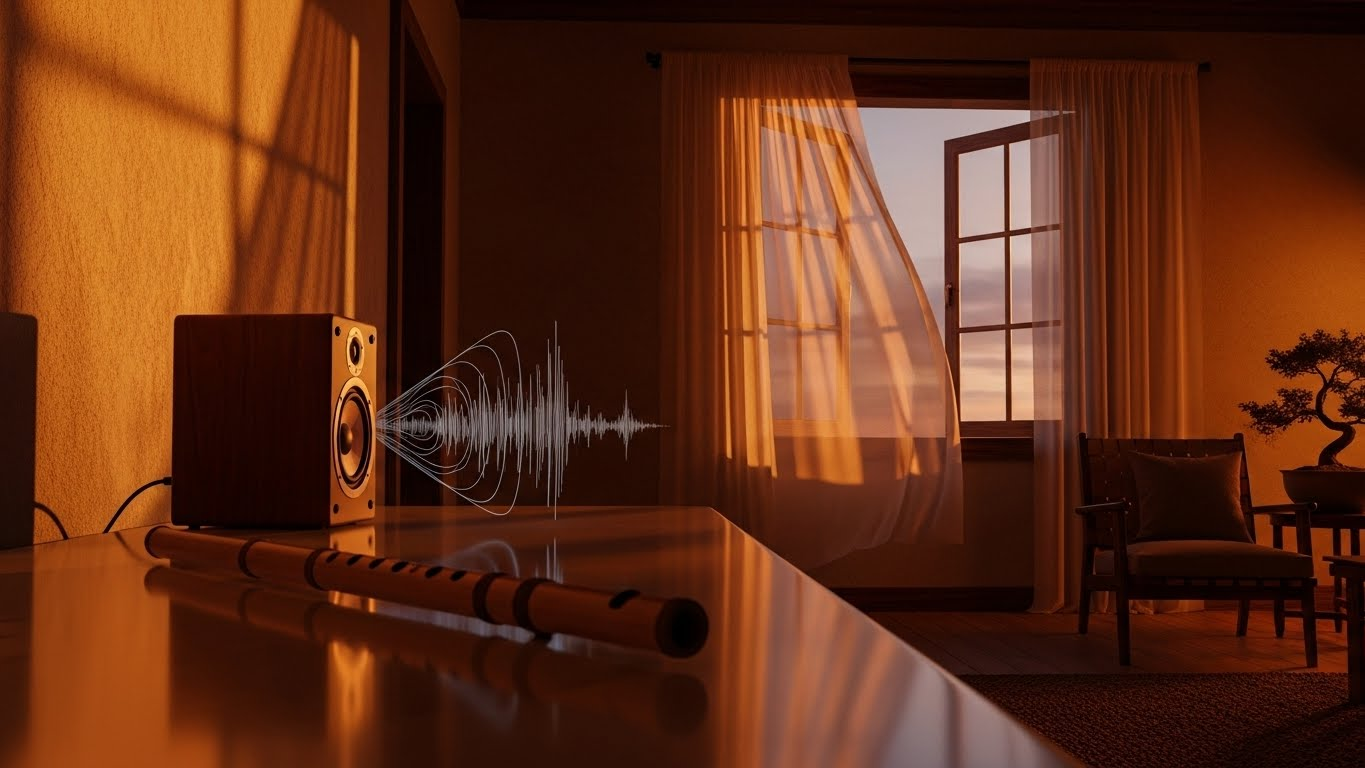
When Korean bamboo flute music plays in warm lighting, the nervous system receives a coherent message. Nothing is urgent. Nothing demands action.
Morning light matters too. Natural daylight helps regulate cortisol’s daily rhythm. This prevents nighttime dysregulation later.
Simple lighting shifts include:
- Warm bulbs after sunset
- Reduced screen brightness
- Consistent lighting in anchor spaces
Lighting does not need to be perfect. It needs to be predictable. Predictability is calming.
Start small, stay consistent, and notice the transformation. This simple reset is a powerful tool to take back your mornings—and your life. Read Heal Fight-or-Flight Response Quickly with Bamboo Flute
Scent and Memory in Sensory Anchoring
Scent deepens sensory anchoring because it connects directly to memory.
Smell bypasses rational thought and enters the emotional brain. This makes it powerful, but it must be used carefully.
Natural scents tend to support regulation. Synthetic fragrances can overstimulate the nervous system.
When paired with Korean bamboo flute music, scent strengthens the anchor. Over time, the combination becomes familiar. The body recognizes it quickly.
Grounding scents include:
- Sandalwood
- Cedarwood
- Frankincense
- Light natural incense
Use scent sparingly. Too much becomes stimulating. Sensory anchoring works through subtlety.
Eventually, the scent alone can cue calm, even before the music begins.
Explore our Meditation Music Collection.
Study on music and anxiety reduction: NIH Sound Therapy Research.
Designing One Healing Anchor Space at Home
A home that heals does not require total redesign. Sensory anchoring works best when it starts small.
Choose one space. A corner. A chair. A room. This becomes your anchor.
In that space:
- Use Korean bamboo flute music consistently
- Keep lighting soft and warm
- Introduce one grounding scent
- Reduce visual clutter
This space becomes a message to your nervous system. Here, you are safe.
At first, nothing dramatic may happen. That is fine. Healing environments work quietly.
Over time, the body learns. Cortisol lowers faster. Rest deepens. Regulation becomes easier.
Discover calming techniques in our Daily Mindfulness Tips.
Music therapy benefits at Mayo Clinic.
Conclusion
Sensory anchoring reminds us that healing is not only internal. It is environmental.
We cannot ask the nervous system to relax while surrounding it with constant stimulation. A home that heals speaks safety through the senses.
Korean bamboo flute music shows how sound can become more than background. It can become a signal. A steady reminder that the body is allowed to rest.
When sound, lighting, and scent align, cortisol lowers naturally. Not because we force calm, but because the environment no longer asks for vigilance.
Healing does not require perfection. It requires consistency.
A single anchored space can change how the body experiences the entire day. Over time, safety becomes familiar again.
Sometimes, healing begins not with insight, but with atmosphere.
3 Key Takeaways
- Sensory anchoring helps design a home that heals by signaling safety to the nervous system.
- Korean bamboo flute music is a powerful example of sound-based sensory anchoring.
- Consistent sensory cues lower cortisol more effectively than willpower alone.


