The Healing Journal – Soojz Mind Studio

5 Quiet Signs of Functional Depression That Are Easy to Miss

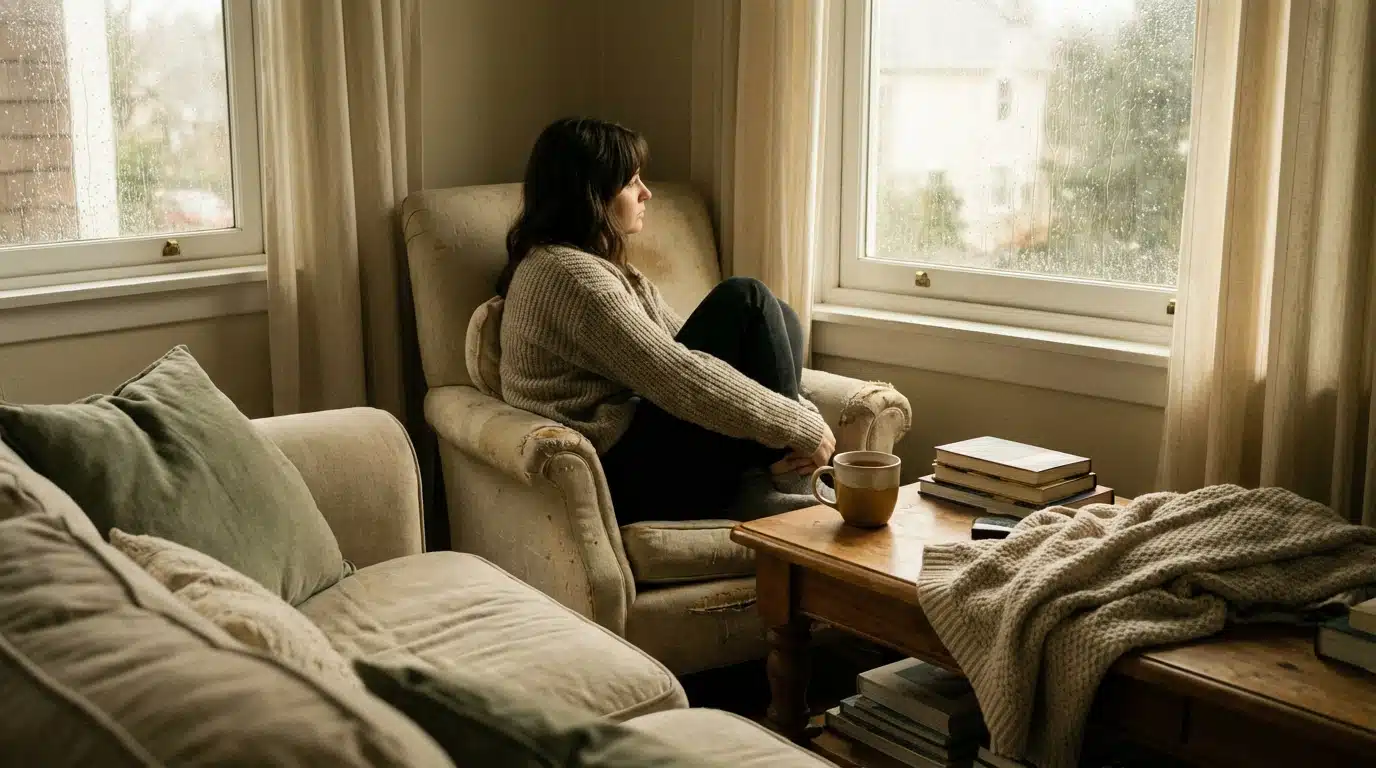
Signs of functional depression became my reality when my life started looking successful on the outside while feeling painfully empty on the inside. I met deadlines, showed up for every commitment with a smile, and kept moving with almost mechanical precision. To everyone else, I looked capable. Inside, I felt hollow, detached, and strangely absent from my own life.

I often describe that version of myself as an efficient ghost. I could do everything I was supposed to do, but I could not feel the warmth of my own achievements. What looked like discipline was often survival. What looked like ambition was sometimes a polished way of hiding pain.

While “functional depression” or “high-functioning depression” is a widely used phrase, it is not a formal clinical diagnosis. Many articles use it to describe people who continue meeting daily responsibilities while living with depressive symptoms, and it is sometimes associated with persistent depressive disorder, or PDD. Medical News Today Healthline

For many high-achievers, signs of functional depression do not look like what people expect. They can look like promotions, spotless kitchens, answered emails, and calendars packed so tightly there is no room left to feel. In high-pressure environments, suffering is often misread as drive. I learned how easy it is to brand emotional pain as discipline when everyone praises your performance.

These quiet signs of depression are part of a shared psychological story that often goes untold because they do not resemble the stereotype of visible collapse. The danger is not just the pain itself. The danger is that no one notices you are drowning because you are still making beautiful waves.


1. Productivity becomes your safest hiding place

One of the earliest signs of functional depression in my life was how deeply I relied on productivity to regulate my emotions. Staying busy did not just make me feel accomplished. It helped me avoid myself.

If I stopped moving, the silence felt too loud. My to-do list became a kind of armor. As long as I was useful, efficient, and needed, I could postpone the deeper truth that something in me was hurting.

This pattern is common among people who appear high-functioning while struggling internally. Overworking, perfectionism, overachieving, masking distress with cheerful composure, and seeking external validation can all become ways of coping with emotional pain rather than signs of true wellbeing. Healthline

The hardest part is that this behavior is often rewarded. People praise your discipline, your consistency, and your work ethic. No one sees that the constant motion may be less about passion and more about escape.


2. You keep achieving, but you cannot feel real satisfaction

Another of the quiet signs of functional depression is emotional numbness. You do the thing. You hit the goal. You finish the project. And instead of relief, pride, or joy, you feel almost nothing.

That was one of the clearest signals for me. I could accomplish something important and immediately move to the next task without letting it land. My life looked full of progress, but my inner world felt empty. I was functioning, but I was not fully present.

This is one reason hidden depression can be so difficult to recognize. A person may still appear composed, productive, and dependable while internally feeling drained, disconnected, or overwhelmed. Being able to function does not mean the distress is mild. It only means it is easier for other people to miss. Healthline

When your worth becomes tied to output, achievement stops feeling nourishing. It becomes maintenance. You do not celebrate because celebration would require you to slow down long enough to notice how little joy is left.


3. Rest feels uncomfortable instead of restorative

A lot of people assume depression always looks like stopping. Sometimes it looks like an inability to stop at all. That is why some signs of functional depression are easy to overlook: from the outside, constant activity can look impressive rather than concerning.

For me, stillness did not feel peaceful. It felt threatening. If I had a quiet evening, my mind filled the space with pressure, sadness, or self-criticism. Busyness felt easier than rest because rest made room for emotions I had spent years outrunning.

Some frameworks that focus on the nervous system, such as Polyvagal Theory, describe how our bodies shift according to cues of safety, stress, and connection. In that language, many people recognize a protective state where they can still perform outwardly while feeling inwardly shut down or disconnected. The key idea is that safety, co-regulation, and connection matter deeply to how we function. Polyvagal Institute

That perspective helped me become more compassionate with myself. I stopped treating my difficulty with rest as laziness or failure. I started seeing it as information. My body was not fighting me. It was trying to protect me in the only way it knew how.


4. Your body is sending signals your mind keeps minimizing

Functional depression does not live only in thoughts. It often shows up in the body first. In my experience, some of the most persistent signs of functional depression were physical before they were verbal.

Sometimes it looks like chronic tension, shallow breathing, fatigue that does not go away with sleep, brain fog, irritability, or the strange feeling of being disconnected from your own physical presence. You may still be going through the motions, answering messages, attending meetings, and keeping everything together while your body keeps signaling that something is off.

That is why small grounding practices can matter so much. Mindfulness, meditation, and breathing exercises have been shown to help relieve anxiety symptoms and improve our ability to cope with stress. Even short practices can create a little more space between pressure and reaction. Harvard Health

For me, healing did not begin with dramatic transformation. It began with micro-moments of return: five slow breaths between meetings, noticing my feet on the floor, unclenching my jaw, letting my shoulders drop, and asking myself what I was actually feeling instead of what I was producing. Those moments were not productivity hacks. They were acts of reconnection.


5. Everyone depends on you, so no one checks on you

One of the most painful signs of functional depression is social invisibility.

Because I was reliable, people assumed I was fine. Because I was the strong one, no one thought to ask whether I needed support. I had become the person others leaned on, and over time that role made it even harder to admit I was struggling.

Research on resilience consistently shows that social support matters. Positive relationships help buffer stress, support psychological wellbeing, and play a major role in how people recover from hardship. Social connection is not a luxury. It is part of what helps us stay emotionally alive. Greater Good Science Center

That is why one of the bravest things a high-functioning person can do is say, “I am getting everything done, but I am actually not okay.” Not to everyone. Not performatively. Just to one safe person. One honest conversation can begin to loosen the grip of the mask.


What healing started to look like for me

Healing did not begin when I became more productive, more optimized, or better at managing appearances. It began when I stopped treating my pain like a branding problem.

I had to learn that being a human being is more important than being a human doing. I had to stop measuring my wellness by how impressive I looked from the outside. I had to stop assuming that because I was functioning, I was fine.

If any of this sounds familiar, let this be your reminder: you do not have to earn care by falling apart visibly. You do not have to wait until your life stops working to admit that something hurts. And you are not weak for needing support while still showing up for your responsibilities.

The signs of functional depression can be quiet, but quiet does not mean insignificant. Sometimes the people suffering most are the ones who look the most put together. Sometimes the strongest-looking life is the one asking, very softly, to be witnessed.

And sometimes healing begins with nothing more dramatic than telling the truth.


FAQ: Signs of Functional Depression

What are signs of functional depression?

Signs of functional depression can include emotional numbness, perfectionism, overworking, difficulty resting, physical tension, and feeling deeply disconnected while still managing daily responsibilities. The phrase is commonly used in everyday conversation, but it is not a formal diagnosis. Medical News Today

Can you have signs of functional depression and still be productive?

Yes. Many people experience signs of functional depression while continuing to meet deadlines, maintain relationships, and appear “fine” from the outside. That outward functioning can make depression harder for others to recognize. Healthline

Is functional depression the same as persistent depressive disorder?

Not exactly. “Functional depression” is not a clinical diagnosis, but some people use it to describe experiences that may overlap with persistent depressive disorder or other forms of depression. Medical News Today

Living Without Permission After Abuse Finally Set Me Free

Living without permission after abuse was something I did not even know I needed to learn. I thought leaving was enough. I thought that once the relationship ended the invisible rules would lift — that I would wake up one morning and simply feel free. Instead I found myself hesitating before speaking. Pausing before resting. Questioning whether I was allowed to feel joy. The abuse had ended but the shadow of control had not. It lingered in the most ordinary moments — delaying a meal because I should be productive, silencing a thought before it escaped my lips, holding back a laugh because part of me still feared judgment.

It took me a long time to understand that living without permission after abuse is not something that happens automatically when you leave. It is something you have to actively and deliberately learn. This post is about that learning — the echoes of control I did not expect, the small radical acts of self-permission that changed everything, and the daily practices that finally set me free.


The Invisible Rules I Did Not Know I Was Still Following

Living without permission after abuse begins with recognising something deeply uncomfortable — that the control did not end when the relationship did. It had moved inside me.

I noticed it in the smallest moments. I would reach for a snack and immediately feel I needed to justify it. I would start a sentence and stop myself before the words came out — not because someone was there to silence me but because the silencing had become automatic. I would feel a surge of happiness and immediately brace for something to go wrong, as though joy itself was a provocation.

Control leaves a residue in the nervous system. It is the tension in the chest before speaking. The self-questioning that arises before any decision. The subtle hesitation — that invisible pause — that exists even in solitude. I had internalised the rules so completely that I was enforcing them on myself long after the person who created them was gone.

The first step toward living without permission after abuse was simply noticing this. Not judging it. Not trying to immediately fix it. Just pausing when the hesitation arrived and gently asking — is this my need or is this someone else’s expectation I am still carrying? Awareness alone does not free you. But it opens the door. And for me that door had been closed for a very long time.


The Day I Let Myself Cry Without Asking Anyone If It Was Okay

Reclaiming permission to feel was one of the hardest and most transformative parts of living without permission after abuse. For so long my emotions had been policed. Anger was too much. Sadness was weakness. Even joy had felt unsafe — a target, a vulnerability, something that could be used against me.

I had learned to pre-approve my own feelings before allowing myself to have them. Is this feeling reasonable? Is it proportionate? Will expressing it cause a problem? By the time I had finished the internal audit the feeling had usually passed — unacknowledged, unfelt, quietly added to a growing internal debt.

The moment that changed everything was surprisingly small. I was alone in my apartment on an ordinary Tuesday evening and something made me sad — something minor, almost embarrassingly so. And instead of suppressing it I just let the tears come. I did not text anyone for permission. I did not check whether it was appropriate. I simply felt it. Fully. In my own body. In my own time.

That small act of self-permission felt revolutionary. Not because crying is extraordinary — but because doing it without asking anyone’s approval was something I had not done in years. According to Psychology Today, reclaiming emotional autonomy after prolonged control is one of the most significant markers of genuine recovery. My emotions, I was learning, belonged to me. All of them. Without conditions.


My Body Remembered Freedom Before My Mind Did

Something I did not expect about living without permission after abuse is how physical the healing would be. I had thought of recovery as primarily an emotional and cognitive process — understanding what happened, changing my thinking, rebuilding my beliefs. What I discovered is that the body holds the record of control in ways that the mind cannot always access or explain.

I noticed it in my posture — the habitual slight hunch, the shoulders drawn in, the chest narrowed as though I was still trying to take up less space. I noticed it in the way I moved through public spaces — self-consciously, apologetically, always slightly braced. I noticed it in the way I breathed — shallowly, quietly, as though even my breath needed to be kept small.

The practice that helped me most was almost embarrassingly simple. I started taking long walks alone. Not to get anywhere. Not to be productive. Just to move through space without anyone’s approval. At first each step felt heavy — shadowed by the old hesitation. But with every walk something shifted. My shoulders began to drop. My chest began to lift. My stride began to lengthen. The Polyvagal Institute describes this kind of deliberate physical movement as a somatic reset — a way of sending new safety signals to a nervous system that has been locked in chronic self-constriction. My body remembered freedom before my mind had fully caught up. And I learned to trust that physical knowing.


When I Stopped Waiting for Someone Else to Decide

The most transformative shift in living without permission after abuse came not in a dramatic moment but in a quiet accumulation of small ones. The first time I ordered exactly what I wanted at a restaurant without checking whether it was acceptable. The first time I shared a thought with a friend without spending twenty minutes pre-editing it for palatability. The first time I said no to something — clearly, without a long explanation — and felt the solid ground of my own authority beneath me.

I had been treating my own judgment like a rough draft that always needed someone else’s approval before it could be finalised. What I gradually learned is that the judgment was not the problem. The waiting was the problem. Every time I waited for external validation before acting I was reinforcing the belief that my own perception was insufficient. Every time I acted on my own authority — however small the action — I was building something different. Something that felt, slowly and unmistakably, like self-trust.

I started with what I now call micro-decisions. Choosing a pen colour. Picking a walking route. Deciding what to watch without consulting anyone. These choices did not matter in themselves. What mattered was the practice of choosing — of letting my first instinct stand without immediately overriding it. The Greater Good Science Center at Berkeley confirms that small repeated acts of autonomous decision-making measurably rebuild self-efficacy after prolonged experiences of external control. I was not just making small choices. I was rewiring something.


The Daily Practices That Kept Me Free

Living without permission after abuse is not a destination I arrived at once and then stayed. It is a practice I return to every day — sometimes easily, sometimes with effort, always with intention. These are the rituals that have kept me anchored in my own authority.

Every morning before I look at my phone I ask myself one question — what do I need today? Not what should I do. Not what is expected of me. What do I actually need. And then I try to honour the answer even in the smallest way. Some days that means a slow breakfast. Some days it means saying no to something I would previously have said yes to automatically. Some days it simply means sitting in silence for five minutes without filling it with productivity.

I also practice what I call the affirmation of existence — saying to myself, quietly and without drama, I am allowed to take up space today. I am allowed to feel what I feel. I am allowed to change my mind. These are not affirmations in the motivational poster sense. They are corrections. Gentle, daily corrections to the distorted software that abuse installed.

The Mayo Clinic recommends mindfulness-based practices specifically for survivors of controlling relationships — noting that regular check-ins with internal experience are among the most effective tools for rebuilding autonomy and self-trust. Living without permission after abuse requires this kind of daily tending. Not because freedom is fragile — but because after years of external control, choosing yourself is a skill that needs practice before it becomes natural.


What Freedom Actually Feels Like From the Inside

I want to tell you what living without permission after abuse actually feels like — not in the triumphant way it is sometimes described but in the quiet, ordinary, almost unremarkable way it has arrived in my life.

It feels like dancing alone in my living room and not stopping when I hear a noise in the hallway. It feels like starting a creative project purely because it interests me and not because it will impress anyone. It feels like laughing fully — not the edited, appropriate laugh I had learned to produce — but the real one that comes from somewhere deeper and does not check itself before it arrives.

It feels like taking a long walk with no destination and feeling the particular freedom of a body that belongs entirely to itself. It feels like sitting with an uncomfortable emotion without immediately trying to resolve or suppress it. It feels like saying what I actually think to someone I trust and discovering that the world does not end.

Freedom, I have learned, does not announce itself loudly. It whispers in moments when you honour your instincts, make decisions independently, and let yourself fully inhabit your own experience. Living without permission after abuse is not the absence of doubt — I still have doubt. It is the presence of something stronger than the doubt. A quiet, steady, growing certainty that my inner permission is enough. That it has always been enough. That I am enough.


CONCLUSION

Living without permission after abuse felt impossible for a very long time. The rules were so deeply embedded I could not always tell where they ended and I began. What I know now — on the other side of that long, non-linear, deeply personal journey — is that freedom was always there. Waiting. Patient. Mine.

Every small choice you make from your own authority is a victory. Every feeling you allow without apology is an act of recovery. Every moment you trust yourself over the echoes of past control is a declaration — quiet, steady, and entirely your own — that your inner permission is enough.

It is. It always was.

Visit Heal.Soojz.com for somatic healing tools and daily practices to support your journey back to yourself.

3 Reasons “I’m Fine” Sabotages Your Authentic Self

When the Mask Cracked

I remember the exact moment I realized I was hiding from my authentic self. It happened when I stopped using “I’m fine” as a shield. For years, those two words were my most reliable survival tactic. They functioned as a social barrier—a quick way to stop the questioning before it could get too close to the truth. I used to believe that if I could just look like a functioning, recovered adult, the internal chaos wouldn’t matter. I thought that by performing wellness, I would eventually catch up to it.

However, I eventually realized that performing wellness is not the same as experiencing it. The moment I realized that being “fine” was actually keeping me from my authentic self was the day I finally understood what it meant to live truthfully. It wasn’t about having a perfect life; it was about having an honest one. Specifically, I was trading the exhaustion of masking for the sustainable peace of being whole.

For survivors of narcissistic abuse, this is especially important. Psychology Today explains how chronic invalidation teaches the nervous system to hide vulnerability — making phrases like “I’m fine” an automatic defense.


Reason 1: It Creates a Glass Ceiling for Your Growth

For a long time, I stayed stuck because I confused “not using” with actually being well. I carried my old survival mechanisms into my new life, terrified that if I showed a single crack, the whole structure would collapse. This is why I now believe “I’m fine” is so dangerous: it creates a glass ceiling for your growth.

When I defaulted to “fine,” I wasn’t just protecting myself from others. I was actively lying to my own nervous system. I was telling my brain that my true feelings were a threat that must be hidden. This kept me in a state of “functional freezing,” moving through the world but never actually connecting with it. I learned that “faking it ’til you make it” only made me a better actor, not a healthier person. To reclaim your authentic self, you must treat vulnerability as strength, not a liability.


Reason 2: It Leads to “Isolation in Plain Sight”

Prioritizing the appearance of recovery over the substance of it created deep structural issues in my life. Specifically, I was engaging in emotional bypassing—using “fine” to skip over necessary grief or anger. I was isolated in plain sight, surrounded by people but known by none.

This performative recovery led to massive energy depletion. The sheer exhaustion of maintaining a facade 24/7 left me with nothing for my actual growth. Even with anger, I had to shift my perspective. I used to think it was “negative,” but I now see it as a primary emotion that protects your boundaries and preserves your authentic self. For deeper understanding, The National Domestic Violence Hotline explains how emotional suppression keeps survivors trapped in cycles of self-blame.


Reason 3: It Prevents Real Nervous System Regulation

To move toward authentic living, I had to recognize the difference between my mask and my reality. This shift is grounded in Polyvagal Theory, which taught me that safety is the foundation of health. When I am in a state of “survival fine,” my response is an automatic reflex rooted in high-functioning anxiety. My goal in that state is conflict avoidance and people-pleasing.

In contrast, the reality of being whole feels different. My response shifts to, “I’m struggling, but I’m here.” My inner state becomes one of grounded, honest resilience. Instead of suppression, I practice nervous system regulation. My goal moves from self-protection to authentic connection — a key step for reclaiming your authentic self after narcissistic abuse.


My 30-Day Experiment with Honesty

I committed to a 30-day experiment where I eliminated “I’m fine” from my vocabulary. Within a week, my resting heart rate during social interactions dropped. I stopped managing a lie and started existing in reality.

Surprisingly, people didn’t pull away—they became more vulnerable with me. The energy I saved by dropping the mask allowed me to focus on personal growth and reconnect with my authentic self. For guidance on cultivating honesty and self-compassion, Psychology Today offers research-backed practices.


The “Pause and Pivot” Strategy

The strategy that changed my results was what I call the “Pause and Pivot.” Before responding to a check-in, I take three seconds to scan my body. This practice, supported by research on affect labeling, allows me to move away from the “survival fine.” Instead, I use phrases like:

  • “I’m navigating some heavy things right now.”
  • “I’m practicing being honest about my capacity today.”
  • “I’m okay, but I’m also tired/overwhelmed/grateful.”

By integrating these phrases, I tell my brain that it is safe to exist in the truth. Emotional complexity is not chaos—it’s information. When I stop fighting my inner world, I finally begin to trust myself again and reconnect with my authentic self.


Embracing the Reality of the Journey

People often ask if saying “I’m fine” is always bad. I don’t think so—it’s a valid boundary with strangers. But when it becomes your only response, it sabotages your authentic self.

You can be whole and still have bad days. Wholeness is integrating light and shadow, accepting that vulnerability does not equal weakness. Reclaiming your authentic self is about living honestly, not perfectly. Every honest moment builds trust with yourself and your recovery.

For additional support, Healthy Place offers resources and coping strategies specifically for survivors of narcissistic abuse seeking to reconnect with their authentic self.

Feel Like a Burden? 5 Steps to Overcome It Today

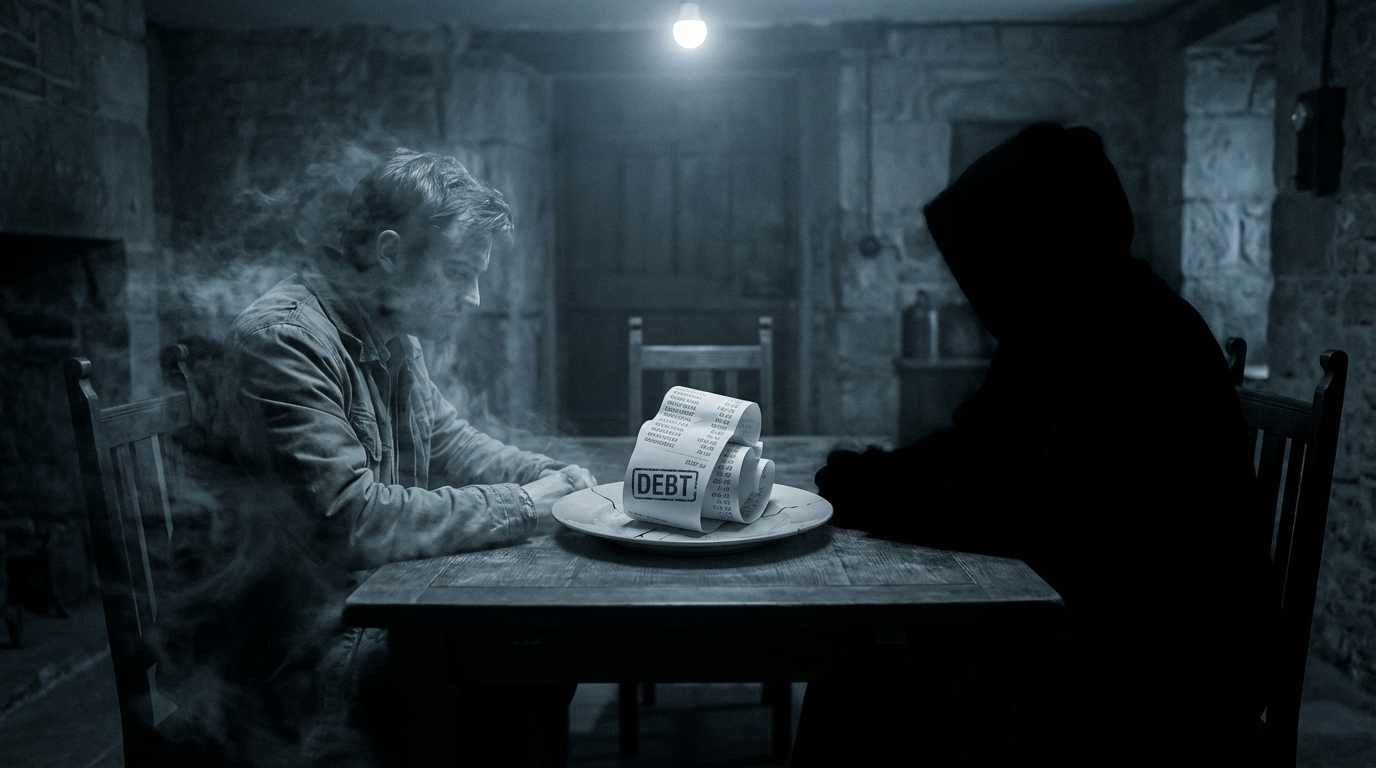
Do you feel like a burden to the people you love? I spent years believing that my presence was only tolerable if I remained invisible and “low-maintenance.” Specifically, I treated my existence like a debt that my loved ones never signed up to pay. Consequently, I stayed small, quiet, and incredibly lonely.

However, I finally realized that my hyper-independence was just a wall. By refusing to feel like a burden, I was actually shutting out the very people who wanted to love me. I had to learn that love isn’t a bank account where I’m constantly overdrawn. Instead, it is an ecosystem that requires both giving and receiving to survive.

If you are exhausted by this invisible debt, I want to show you exactly how to heal. In this guide, I will share the 5 steps to overcome it today and shift into a space of healthy interdependence.


Why Feeling Like a Burden Stays So Quiet for So Long

Specifically, to feel like a burden does not always feel heavy in an obvious way. It often feels “responsible.” It sounds like being considerate, like not wanting to overwhelm anyone, like making sure you are easy to be around. It blended so seamlessly into my personality that I did not immediately recognize it as a symptom of deep-seated shame.

For a long time, I did not feel like I was abandoning myself. Instead, I thought I was showing emotional maturity. I believed I was doing the right thing by needing less and handling everything alone so no one would ever have to feel like a burden by associating with me. But underneath that was a constant, quiet calculation. I was always measuring how much space I occupied. To help understand this shift, I often look at Healthline’s guide on how to stop feeling like a burden, which highlights how common this struggle is.


Where This Feeling Actually Comes From

Before anything could change, I had to understand that the tendency to feel like a burden did not come from nowhere. Specifically, I learned it slowly. It often comes from environments where being “easy” made things smoother for others. Your nervous system adapts to these early experiences in intelligent but isolating ways.

You start to notice patterns: things go better when you ask for less. Consequently, your system decides to become hyper-self-reliant to avoid the risk of rejection. This creates what Psychology Today calls the “Trap of Hyper-Independence,” where we mistake isolation for strength. That adaptation follows you into adulthood as a rule that says the safest way to be close to others is to never let them feel like a burden because of your needs.


Why This Is Not Something You Can Just “Think Away”

Logically, I knew I was not a burden. I even believed that for other people. But when it came to myself, the impulse to feel like a burden still showed up automatically. That is because this is not just a thought; it is a somatic state. Not asking feels safer to your body than risking being turned away.

When you try to change that pattern, your body reacts with anxiety. This is not because something is wrong, but because the vulnerability feels unfamiliar. Tools from the Polyvagal Institute help us understand that our nervous system needs to feel safe before we can truly let go of the fear that we might feel like a burden to those we care about most.


5 Steps to Overcome Feeling Like a Burden

The shift does not happen in dramatic moments. It happens in small, repeated experiences that quietly accumulate. For me, I came to think of them as five steps—subtle but powerful ways to show my system a different way of being.

Step 1: Notice the Moment You Start Pulling Back

The pattern doesn’t begin when you feel like a burden. It begins just before that. Specifically, it is the moment you almost say something… and then stop. It is the message you rewrite to sound “easier.” I had to start paying attention to these micro-moments of removal. Awareness is the first step because I could not change what I could not see.

Step 2: Get Curious About the Rule You Are Following

There is usually a quiet rule underneath this pattern. For me, it was: “Do not make things harder for anyone else.” When I paused and asked where that rule came from, I began to see that it was a learned survival tactic. Many resources from Harvard Health discuss how these early-life patterns of self-restraint can lead to chronic anxiety in adulthood. Recognizing the rule exists allows space for change.

Step 3: Show Up Slightly More Than Usual

This step is about gently nudging yourself to be seen a little more than normal. Specifically, it involves saying what you actually feel instead of softening it. At first, it feels risky to let someone witness a part of you that you would normally hide. But I realized that healing happens in the spaces where I allow myself to stay instead of pulling away.

Step 4: Let Support Land Without Explaining It Away

Even when care is offered, there can be a reflex to minimize it. I had to practice letting the support land. This means letting someone care for me without immediately justifying why I deserved it. The Greater Good Science Center has incredible research on the “Science of Receiving Help,” proving that letting others in actually strengthens the bond for both people.

Step 5: Let Your Understanding of Connection Evolve

True connection does not exist only in being easy or low-maintenance. Specifically, it includes needs, feelings, and moments of uncertainty. Letting my relationships accommodate all of that allows me to experience connection in a fuller way. I began to see that taking up space does not make me a burden—it makes me human, and fully present.


What Begins to Shift Over Time

At first, the changes are quiet and almost imperceptible. I noticed that I started to hesitate a few seconds less before reaching out to a friend. I began to catch myself in the act of pulling back—that familiar internal ghosting—and sometimes, I chose to stay in the conversation instead. It was not a sudden explosion of confidence. Rather, it was a series of tiny, brave decisions to let a moment of support remain exactly where it was instead of brushing it aside with an apology.

Specifically, nothing dramatic happened overnight. But as these moments accumulated, I started to experience my own existence differently. I stopped viewing my emotions as “expensive” or my needs as a debt I could never repay. I realized that the people who love me aren’t looking for a “return on investment”; they are looking for a connection. Consequently, I moved from a state of constant self-editing into a space of genuine presence. I am not someone who is “too much” for the world; I am simply a person who is finally worthy of the support I have always given to everyone else.


My Final Thought for You

For a long time, I lived under the heavy illusion that the ultimate goal of healing was to never feel like a burden. I thought that if I could just handle everything perfectly and need nothing, I would finally be safe. Now, I see it differently. Specifically, the goal is not to need less. The goal is to stop disappearing in order to be loved. You are not a problem to be managed, a fire to be put out, or a bill that is too high to pay.

Instead, you are a human being shaped by experiences that taught you to take up less space than you deserve. Those patterns can change—not all at once, and certainly not perfectly, but gradually in the small moments where you choose to be seen. Ultimately, you are allowed to be here. You are allowed to be heavy. You are allowed to be supported. You are allowed to be fully and beautifully yourself without the constant fear that you feel like a burden to the world.

5 Proven Benefits of Flute Meditation Music for Healing

Flute meditation music for healing was not something I went looking for. I stumbled onto it at 2am during one of the worst periods of my recovery — nervous system in overdrive, body completely unable to settle. I put on a bamboo flute track almost by accident. Within minutes my shoulders dropped. My breath slowed. The noise turned down.

I have been exploring flute meditation music for healing ever since. What I found is that it is not just pleasant background sound — it is a physiologically active experience that interacts directly with the nervous system. Here are the 5 proven benefits that changed my recovery.


It Signals Safety to a Traumatised Nervous System

The most important benefit of flute meditation music for healing is this — it signals safety to a body that has forgotten what safe feels like.

After trauma or narcissistic abuse the nervous system stays stuck in high-alert. Peace feels threatening. Quiet feels wrong. No amount of rational thinking can override a body that is convinced it needs to stay braced.

The bamboo flute sits naturally within what Dr Stephen Porges, creator of Polyvagal Theory, calls the ventral vagal frequency range. When the nervous system hears these frequencies it begins to receive a neurological message — the environment is safe. You can exhale.

I reach for flute meditation music for healing every time my body needs to believe it is safe before my mind has caught up. This track from The Soojz Project — Heavy Bamboo Rain — is where I always start:

🎵 Listen: https://youtu.be/X-62b5-F4EY


It Actively Changes What Is Happening in Your Brain

Flute meditation music for healing does more than relax you. It actively shifts your brain state.

Sound vibrations stimulate the vagus nerve — the primary regulator of the parasympathetic nervous system. This slows the heart rate, deepens the breath, reduces cortisol, and shifts the brain from stressed beta waves into calm alpha and theta waves associated with emotional processing and deep rest.

Research published by the National Library of Medicine confirms that music therapy using specific frequencies measurably reduces anxiety and lowers blood pressure. The bamboo flute is particularly effective because its overtone-rich, breathy quality gives the nervous system a richer signal to entrain to than any synthesised tone.

This is not passive listening. It is active nervous system rehabilitation — and the results build over time.


Your Body Responds to Frequency Tuning

The third benefit of flute meditation music for healing is one I only discovered after going deeper into the research.

Different frequencies have different physiological effects. 528hz — the Love Frequency — has been associated with cortisol reduction and increased wellbeing. Many bamboo flute compositions are tuned to 432hz — considered by many musicians and researchers to be more harmonious with natural acoustic systems than standard Western tuning.

I cannot tell you with certainty that these frequencies will heal your nervous system. What I can tell you is what I experienced — a deeper settling, a more complete release, a quality of stillness that standard music did not produce in the same way. My body knows the difference. This second track from The Soojz Project uses layered bamboo flute frequencies specifically designed for deep nervous system restoration:

🎵 Listen: https://youtu.be/ImQuMIajw8w


It Creates Space to Hear Your Own Voice Again

After trauma your internal voice gets crowded out. Your preferences, instincts, and desires become unreliable — not because they disappeared but because you learned to silence them to survive.

Flute meditation music for healing creates an acoustic environment in which it becomes safe to feel whatever is actually there. It does not demand anything. It simply holds space. In those listening sessions things I had been too activated to feel for years began to surface quietly — grief, relief, anger, joy — in a way that felt gentle rather than overwhelming.

Flute meditation music for healing became for me a daily practice of returning to myself. Of sitting in my own presence without flinching. That practice, more than almost anything else, is what recovery has felt like from the inside.


It Is the Easiest Healing Practice to Actually Maintain

The fifth benefit of flute meditation music for healing is the most practical. It is one of the few healing practices I have actually maintained consistently — because it asks almost nothing of me.

I do not need to be in a particular state to start. I just press play. My daily practice is simple — five minutes before I look at my phone in the morning, a short session between work and evening to shift states, and thirty minutes as I fall asleep.

The Mayo Clinic recommends music-based relaxation as an evidence-based tool for anxiety and sleep. What I have found is that bamboo flute specifically — its organic warmth, its natural resonance — does something generic relaxation music cannot. It does not just fill silence. It transforms it.


CONCLUSION

Flute meditation music for healing found me when nothing else was working. I did not expect it to become a central part of my recovery. But here I am — calmer, more regulated, more able to feel my own feelings — because I learned to sit with a bamboo flute and let my nervous system remember what safe sounds like.

🎵 Start here: https://youtu.be/X-62b5-F4EY 🎵 And here: https://youtu.be/ImQuMIajw8w

Visit Heal.Soojz.com for more somatic healing tools to support your recovery.

7 Empowering Insights to Stop Second-Guess After leaving a narcissist

I second-guess after leaving a narcissist more than I ever expected to. I thought that once I got out — once I was finally safe, finally free, finally in control of my own life — the fog would lift and my decisions would come easily again. Instead I found myself standing in the grocery aisle for fifteen minutes unable to choose between two loaves of bread. I found myself making a major life decision and immediately spiralling into panic, convinced I had made a catastrophic mistake. I found myself calling a friend at midnight asking if I had done the right thing — about something I had already decided three weeks ago.

If you recognise that feeling — that constant, exhausting internal courtroom where every decision goes on trial — you are not alone. So many survivors continue to second-guess after leaving a narcissist long after the relationship has ended. What I eventually learned is that this second-guessing after leaving a narcissist is not a character flaw. It is not weakness. It is not evidence that you are broken or that you made the wrong choice. It is a predictable, physiological response to prolonged gaslighting. And once I understood exactly why it was happening I finally had a way through it. Here are 7 empowering insights for everyone who still second-guesses after leaving a narcissist — and what I am doing about each one.


Insight 1 — My Internal Compass Was Deliberately Demagnetised

The first reason I second-guess after leaving a narcissist is the one that took me longest to understand. In the relationship I had been systematically taught that my perception was inherently flawed. Every time I saw a red flag I was told it was a misunderstanding. Every time I felt hurt I was told I was too sensitive. Every time I trusted my gut I was shown — repeatedly and convincingly — that my gut was wrong.

Over time I did what any rational person would do in that situation. I stopped trusting myself. I delegated my reality to the narcissist because checking my own internal compass only ever led to an argument I could not win. I outsourced my judgment entirely just to survive each day. And it worked — as a survival strategy. The problem is that once I left I was trying to navigate my own life with a compass that had been deliberately demagnetised over years of gaslighting. Every survivor who continues to second-guess after leaving a narcissist knows exactly what this feels like — that strange, groundless feeling of reaching for a certainty that used to be there and finding nothing.

Research from Psychology Today confirms that prolonged gaslighting creates measurable changes in how survivors process information and make decisions. The neural pathways associated with self-trust become weakened through chronic disuse. I was not indecisive by nature. I had been trained into indecision by someone who needed me uncertain in order to maintain control. Understanding this was the first step. My tendency to second-guess after leaving a narcissist was not a flaw in my character. It was evidence of how thoroughly I had been manipulated — and that evidence deserved compassion, not shame.


Insight 2 — The Two Truths Still Fighting Inside Me

The second reason I second-guess after leaving a narcissist is something I now call the Two Truths problem. And it is exhausting in a way that is very hard to explain to someone who has not lived it.

One truth says — this person was dangerous and I had to leave. I know this truth. I lived this truth. I have the therapy receipts and the journal entries and the 2am phone calls to prove it. The other truth — the one the narcissist spent years carefully installing — says I am difficult, I am the problem, I am lost without them, and I cannot trust my own judgment about anything. These two truths create a constant internal jury that debates every choice I make. Not just the big choices. Every choice. What to eat. What to wear. Whether to take the job. Whether to trust the new person. Whether to feel the feeling I am currently feeling.

This cognitive dissonance is one of the primary reasons survivors continue to second-guess after leaving a narcissist months or even years after the relationship ends. The jury never rests. It never reaches a unanimous verdict. And every time I try to make a decision it reconvenes and starts the whole process again. What I have learned to do with this is to notice which truth is speaking.

When the doubt arrives I ask — is this my voice or is this the survival script I was handed? It sounds simple. It is not. But with practice I have learned to recognise the narcissist’s voice in my head — its particular tone, its specific vocabulary, its habit of arriving exactly when I am about to do something brave. Naming it does not silence it immediately. But it creates just enough distance to act anyway.


Insight 3 — My Nervous System Is Still Braced for Punishment

The third reason I second-guess after leaving a narcissist is purely physiological. For a long time in that relationship making a choice — even a small one — could result in a three-day silent treatment or a sudden explosion of rage. My brain learned through painful repetition that deciding was a high-risk activity. That being certain was dangerous. That the safest strategy was to always leave room to retreat, revise, and apologise.

Now the threat is gone. The narcissist is not in my kitchen. They are not going to punish me for choosing the wrong bread. My nervous system has not received this update. It is still braced for a punishment that is never coming. The tendency to second-guess after leaving a narcissist is actually a pre-emptive strike — my brain desperately scanning every option trying to find the perfect answer that will keep me safe from an attacker who no longer exists.

According to the Polyvagal Institute this is a classic symptom of a nervous system stuck in chronic high-alert. The vagal brake — the mechanism that helps us settle into calm, clear-headed decision-making — is not fully engaging. I cannot think clearly because my body does not yet believe it is safe enough to think clearly. Every time I second-guess after leaving a narcissist I try to remember this — it is not a thought problem. It is a body problem. And the body responds not to arguments but to slow, repeated, physical evidence that the danger has passed.


Insight 4 — I Lost the Habit of Listening to Myself

The fourth reason I second-guess after leaving a narcissist is simpler and more painful than the others. I lost the habit of listening to myself. Not because I stopped having instincts — but because I learned to immediately override them.

I remember the first time after leaving that I had a clear uncomplicated gut feeling about something. A new acquaintance who felt slightly off. A situation that did not sit right. A decision that my body said no to before my mind had even finished processing the question. And my immediate response — automatic, instant, deeply conditioned — was to argue myself out of it. To find the rational explanation for why my gut was probably wrong. To give the benefit of the doubt. To be fair. To not be too sensitive. That reflex was not mine. It had been installed by years of being told that my instincts were the problem.

This is why so many people continue to second-guess after leaving a narcissist even when they feel otherwise strong and recovered. The override has become automatic. Reclaiming intuition is one of the hardest parts of recovery — not because the intuition is gone but because the habit of dismissing it runs so deep. What I practice now is honouring the first impulse. When a feeling arrives I try to notice it before the jury convenes. I write it down. I say it out loud. I give it five seconds of being real before the second-guessing begins. Those five seconds are building something. Slowly. Stubbornly. Mine.


Insight 5 — Cognitive Dissonance Scrambles Every Decision

The fifth reason I second-guess after leaving a narcissist is cognitive dissonance — and it affects far more than just my feelings about the relationship itself. It scrambles every decision I try to make long after I have left.

Cognitive dissonance is the mental discomfort of holding two conflicting beliefs simultaneously. In the context of narcissistic abuse it is the experience of knowing someone was harmful while also having genuinely loved them. Of knowing the relationship was toxic while also grieving its loss. Of knowing I made the right choice while also feeling like I destroyed something irreplaceable. These contradictions do not resolve neatly or quickly. They sit side by side, uncomfortably, for a very long time.

Here is what nobody tells you about cognitive dissonance — it generalises. When the brain is already managing two irreconcilable truths about something as fundamental as a primary relationship it struggles to feel certain about anything else either. Uncertainty becomes the default setting. Every new decision carries the ghost of all the unresolved ones.

This is why survivors who feel otherwise settled and recovered still find themselves continuing to second-guess after leaving a narcissist about things that seem completely unrelated to the relationship. I have worked through this with a practice I call anchoring to the body. When the mental jury starts deliberating I stop engaging with the arguments and ask instead — how does this feel in my chest? In my stomach? In my shoulders? The body often knows before the mind catches up. Learning to read that physical signal has been one of the most important parts of my recovery.


Insight 6 — The Fear of Being Wrong Again

The sixth reason I second-guess after leaving a narcissist is the one I find hardest to say out loud. I am afraid of being wrong again.

I was wrong about who they were. I was wrong about how safe the relationship was. I was wrong about how long to stay. I gave years of trust to someone who used that trust as a weapon. And the consequence of being wrong was not just pain — it was a fundamental destabilisation of my ability to know what was real. If I was that wrong about something that important — how can I trust myself about anything? This fear sits underneath every decision I make now. It is the reason I second-guess after leaving a narcissist even about things that have nothing to do with relationships or trust or other people.

What I have learned to hold onto is this. I was not wrong because my judgment was broken. I was wrong because I was deliberately manipulated by someone skilled at deception. There is a profound difference between those two things. One is a flaw. The other is evidence of what was done to me.

I was not a bad judge of character. I was a good person who trusted someone who did not deserve it. Repeating that distinction to myself — slowly, consistently, as many times as it takes — is how I am learning to stop letting the fear of being wrong again keep me from living fully. The tendency to second-guess after leaving a narcissist does not mean my judgment is broken. It means I survived something that was designed to break it.


Insight 7 — Coming Back to Myself — What Is Actually Helping

The seventh and most hopeful reason I second-guess after leaving a narcissist is simply this — I am still healing. And healing is not linear, not fast, and does not look the way I expected it to look. Some days I make three decisions before breakfast without a second thought. Other days I cannot choose between two identical options without my heart rate going up. Both of those days are part of the same recovery. Both of them count.

What is actually helping me is not grand gestures or dramatic breakthroughs. It is small, consistent acts of practising certainty in low-stakes situations. I choose a pen colour and I do not change my mind. I order the first thing on the menu that appeals to me and I commit to it. I take the route I feel like taking rather than deliberating about which is better. These tiny acts of committed choosing are rebuilding the neural pathways of self-trust that gaslighting wore down over years. The Mayo Clinic recommends exactly this kind of graduated exposure for people recovering from chronic self-doubt — starting small, building slowly, celebrating effort rather than outcome.

I also name the critic every time it arrives. When I notice myself starting to second-guess after leaving a narcissist I say — out loud if I can — that is not my voice. That is a survival script I no longer need. It does not always work immediately. But it interrupts the automatic spiral long enough to take one small step forward. And right now one small step forward is everything. The static is clearing. The compass is coming back online. And the voice I am starting to hear underneath all the doubt — quiet, certain, patient — is finally, unmistakably mine.


CONCLUSION

I second-guess after leaving a narcissist — and I have stopped being ashamed of that. The doubt is not evidence of weakness. It is evidence of what was done to me. And what was done to me does not get to define what I am capable of becoming.

The static is clearing. Slowly. Imperfectly. Mine.

Visit Heal.Soojz.com for somatic healing tools and daily practices to support your nervous system as it learns to trust itself again.


References & External Resources

Depression Feels Like Isolation — I Found My Way Back

Depression feels like isolation — and I do not mean that as a metaphor. I mean it as the most accurate description I have ever found for what those years actually felt like inside my body. I could be sitting in a room full of people I loved and still feel completely invisible. Not unseen by them — unseen by myself. As though a thick fog had settled around my mind and no amount of warmth from the outside world could penetrate it.

I know now that what I was experiencing was not a character flaw or a failure of will. It was a physiological state. My nervous system had shut down. My brain chemistry had shifted. And my body — in its desperate attempt to protect me from more pain — had pulled me so far inward that I had almost lost the thread back to myself.

This post is everything I wish someone had handed me during those years. Why depression feels like isolation even when you are surrounded by people who care. What your nervous system is actually doing when you go numb. And the small, body-based practices that genuinely helped me find my way back — not to who I was before, but to someone I actually recognised. Someone who felt safe inside her own skin.


The Fog Nobody Talks About

Depression feels like isolation in a way that is almost impossible to explain to someone who has not lived it. It is not simply sadness. Sadness has texture. Sadness moves. What depression does is something quieter and more insidious — it creates a deep internal silence that separates you from your own feelings, your own thoughts, and eventually from the people around you.

I remember sitting at a dinner table with people I genuinely loved — laughing, talking, warm — and feeling like I was watching the scene from behind a pane of glass. Present but not present. There but not there. The fog did not announce itself. It arrived gradually, like a tide coming in so slowly you do not notice until you are already underwater.

What I eventually learned is that this disconnection is not random. Depression changes brain chemistry in ways that directly affect how you experience connection. When serotonin and dopamine levels drop, joy and motivation do not just fade — they become physically inaccessible.

The neural pathways that once lit up with warmth and belonging go quiet. And when those pathways go quiet long enough the brain begins to tell stories to explain the silence. Nobody understands you. You will only bring others down. Stay quiet. These stories feel like truth. They are not. They are symptoms. Recognising that difference — understanding that depression feels like isolation because of biology not because of who you are — was the first crack of light in a very long darkness.

Depression alters brain chemistry, impacting the experience of connection by lowering serotonin and dopamine levels, which makes joy and motivation feel physically unreachable. As neural pathways associated with warmth and belonging quiet down, the brain creates negative narratives, leading to feelings of isolation and misunderstanding. Recognizing that these thoughts are symptoms of depression and not reflections of one’s identity was the initial breakthrough in overcoming the prolonged darkness of isolation.


What My Nervous System Was Trying to Tell Me

Here is something I did not understand for years. When depression feels like isolation it is not just emotional — it is physiological. My nervous system was not malfunctioning. It was doing exactly what it was designed to do. It was protecting me.

Under chronic stress or unprocessed trauma the body shifts into what researchers call freeze mode — part of the fight-flight-freeze response. In freeze, energy shuts down. Heartbeat slows. Breathing becomes shallow. The body enters a kind of suspended animation because the nervous system has assessed the environment as too overwhelming to engage with directly. That is why depression so often feels like exhaustion rather than sadness. That is why getting out of bed can feel like lifting a physical weight. Your body is not being dramatic. It is in survival mode.

The Polyvagal Institute describes this as a dorsal vagal state — the deepest level of nervous system shutdown, associated with numbness, disconnection, and the sense of being collapsed inward. According to research published on the National Library of Medicine this state is the body’s last resort protection mechanism — and understanding it changed everything for me. I stopped fighting my body and started listening to it. I stopped demanding that it perform connection it was not yet capable of and started asking what it needed to feel safe enough to come back online. The answer, I discovered, was always the same. Gentleness. Slowness. Safety. One small signal at a time.


The Moment I Stopped Trying to Think My Way Out

For a long time I believed that if I could just understand my depression well enough I could reason my way out of it. I read everything. I analysed everything. I built elaborate mental frameworks for why I felt the way I felt. And I stayed exactly as lost as I had been before I started.

The turning point came when I stopped trying to fix my mind with my mind and started working with my body instead. Depression feels like isolation partly because it lives in the body — in the shallow breath, the collapsed posture, the tension held in the chest and shoulders — not just in the thoughts. And the body does not respond to arguments. It responds to experience.

The first body-based practice that genuinely helped me was something almost embarrassingly simple. I started taking five slow breaths every morning before I got out of bed. Not deep dramatic breaths. Just slow, deliberate ones. Noticing the air coming in and going out. Noticing my feet on the floor.

Noticing the temperature of the room on my skin. These small moments of physical noticing interrupted the automatic loop of depressive thinking. They pulled me out of the imagined future and the painful past and back into the only moment that was actually real — this one. Over time these moments became an anchor. Not a cure. But a thread back to myself that I could reach for when the fog got thick.


Small Acts That Brought Me Back to Life

I want to be honest with you about something. Healing from depression does not happen in a single breakthrough moment. It happens in the accumulation of tiny, almost invisible acts of returning to yourself. And for a long time those acts felt so small they barely counted. But they were everything.

I started thinking of my energy like a dimmer switch rather than an on-off button. On the days when getting dressed felt impossible I did not try to do more than get dressed. On the days when leaving the house felt manageable I walked to the end of the street and back. Five minutes outside can stimulate serotonin production. A single text to a trusted friend counts as connection. Sitting in a library or a park — spaces that do not demand interaction but remind you that life is happening around you — can quietly remind your nervous system that the world is not as dangerous as it currently believes.

I also started practicing what I now call Glimmer Hunting — deliberately noticing the small moments that felt even slightly good and staying inside them for five seconds longer than felt comfortable. Sunlight through a window. The smell of coffee. A song that made my chest feel something. According to Psychology Today these micro-moments of positive experience actively retrain the brain’s negativity bias — building new neural pathways toward safety and connection one tiny moment at a time. It is not toxic positivity. It is neuroscience. And it works — not all at once, but slowly and unmistakably, like light coming back into a room you had forgotten was dark.


Finding My Way Back — What I Know Now

Depression feels like isolation — and I want to say clearly that if you are in it right now, the isolation is lying to you. It is telling you that you are alone in this. That no one understands. That reaching out is too hard or too much or too late. None of that is true. Not one word of it.

What I know now — on the other side of those years — is that healing from depression is not about returning to who you were before. The person I was before depression had never learned to listen to her body. Had never learned to sit in stillness without panic. Had never developed the capacity for the kind of deep, quiet self-compassion that sustained recovery actually requires. Healing built something in me that the pain, for all its cost, was the only teacher capable of teaching.

If you are ready to reach out for additional support the Mayo Clinic offers a range of mindfulness and grounding resources specifically designed for people navigating depression and nervous system dysregulation. You do not have to do this alone. And you do not have to do it all at once. Every breath is a step. Every small act of self-kindness is a signal to your body that you are worth coming back to. Because you are. Even on the days when depression feels like isolation so complete that you have almost stopped believing that — you are.


CONCLUSION

Depression feels like isolation — and for years I believed that fog was permanent. I believed the silence was who I was rather than what I was going through. I was wrong. The fog lifted. Not all at once and not without effort. But it lifted. And what I found underneath it was not the person I had been before — it was someone quieter, deeper, and far more capable of real connection than I had ever been.

Your body has not given up on you. It is patiently, persistently waiting for you to come home.

Visit Heal.Soojz.com for somatic healing tools, mindfulness practices, and daily resources to support your nervous system on the journey back to yourself.

I Feel Lost After Abuse When Peace Finally Arrives

I feel lost after abuse — and the strangest part was that I felt most lost when things were finally going well. I had done everything right. I got out. I went to therapy. I surrounded myself with people who genuinely cared about me. The chaos stopped. The phone went quiet. And I stood in the middle of my own carefully rebuilt life feeling like a stranger in a house I had never lived in.

I expected relief. I had dreamed about this quiet for years — lying awake at 2am, heart pounding, bracing for the next storm. I had imagined what it would feel like to finally exhale. And then the quiet arrived and instead of exhaling I felt — nothing I recognised. A strange flatness. A restless emptiness. An almost unbearable urge to do something, check something, feel something that made sense.

Nobody warned me about this part. Nobody told me that peace could feel this disorienting. Nobody said that the body, after years of living in a war zone, does not simply relax the moment the war ends. It keeps scanning. It keeps bracing. It keeps waiting for the impact that no longer comes. And that waiting — that constant, exhausting, invisible waiting — is exactly why so many survivors feel lost after abuse even when the danger is long gone.

If you feel lost after abuse right now — relieved that the storm is over but unsettled by the stillness — I want you to know that you are not broken. You are not ungrateful. You are not failing at recovery. Feeling lost after abuse when peace finally arrives is one of the most common and least talked about experiences in recovery. It has a name, an explanation, and most importantly — a way through. This post is for you.


The Day the Chaos Stopped and I Didn’t Know Who I Was

I remember the exact moment I realised I feel lost after abuse in a way I had never anticipated. It was a Tuesday evening. Nothing was wrong. Nobody was angry. My phone was not blowing up. And instead of feeling grateful I felt a cold creeping anxiety that I could not name or explain.

I had spent years in survival mode — always managing a crisis, predicting a mood, bracing for the next impact. My entire identity had been built around being the person who held everything together inside someone else’s dysfunction. I was the fixer. The soother. The one who stayed calm when everything was burning. And without a fire to put out I had no idea what I was supposed to do with my hands.

What I did not understand yet was that the chaos had not just been something that happened to me. It had become my nervous system’s definition of normal. My brain had been trained to associate high-stakes drama with connection, with being needed, with being alive. When the drama disappeared the brain did not celebrate. It panicked. It went looking for the emergency that was no longer there.

The emptiness I felt was not a sign that I missed my abuser. It was a sign that my nervous system had not yet learned that quiet was allowed. That peace was not a trap. That I was finally — genuinely — safe. So many survivors feel lost after abuse for exactly this reason — not because they are weak but because their brain learned to need the chaos just to feel real. If you feel lost after abuse and cannot understand why — this is why. Your brain is not broken. It is withdrawing.


Is This Boredom — or Something Much Deeper?

For a long time I called it boredom because I did not have a better word for it. But boredom is what you feel when nothing interesting is happening. What I feel lost after abuse taught me was something far more confronting than boredom. It was more like grief. More like vertigo. More like standing in a room where all the furniture had been removed and not knowing where to sit.

The researcher Brené Brown calls this foreboding joy — the inability to inhabit a good moment because your nervous system has categorised peace as vulnerability. If you are happy you are unprotected. If you are bracing for disaster you feel prepared. I had spent so long bracing that I did not know how to put my arms down. Every quiet moment felt like a setup. Every peaceful day felt like borrowed time.

Beneath the boredom lay an unsettling realization: without a crisis to manage, my identity had disappeared, consumed by another’s emotional needs. Years of anticipating moods and minimizing myself left me unrecognizable. The silence compelled me to confront a long-avoided truth—I didn’t know who I truly was. Feeling lost after abuse is not merely about longing for chaos; it’s about facing the self that chaos had obscured. The reflection in the mirror revealed someone capable yet exhausted, entirely unknown to herself.


What Your Brain Is Actually Doing When Peace Arrives

Here is the science that changed everything for me — and the reason so many of us feel lost after abuse even when we know rationally that we are safe. Narcissistic abuse creates a genuine chemical addiction in the brain. The cycle of idealisation and devaluation floods the body with cortisol and adrenaline during the lows — and then delivers a massive dopamine spike when the abuser offers a crumb of affection during the highs. Over time the brain’s receptors become desensitised. You require a high-stakes environment just to feel baseline normal.

According to Psychology Today this dopamine withdrawal is a recognised physiological response — not weakness, not evidence that you still love your abuser, not proof that you are broken. It is biology. Your brain spent months or years being trained to treat drama as oxygen. When the drama stops the brain goes into withdrawal. The flatness you feel is not depression. The restlessness is not ingratitude. The strange urge to check your ex’s social media just to feel something is not love. It is a nervous system reaching for a chemical it was taught to depend on.

Understanding this was one of the most liberating moments of my entire recovery. I stopped blaming myself for feeling I feel lost after abuse and started treating the experience the way I would treat any other withdrawal — with patience, with structure, and with the understanding that the discomfort was temporary. If you feel lost after abuse and wonder when it will end — it will end. Your brain is not broken. It is recalibrating. And recalibration, however uncomfortable, is the beginning of real freedom.


The Quiet Taught Me Something I Was Not Expecting

I want to tell you something that surprised me completely. The silence I was so desperate to escape turned out to be the most important teacher I have ever had. Because when I stopped running from the quiet I began to hear something I had not heard in years — my own voice.

Not the voice that had learned to say whatever kept the peace. Not the voice that had shrunk and apologised and performed. My actual voice. The one that had opinions and preferences and things it genuinely wanted to say. Finding that voice was the moment I stopped feeling like I feel lost after abuse and started feeling like I was finally coming home to myself.

I developed a Glimmer Practice that involves intentionally noticing and savoring small, positive moments, such as enjoying a perfect cup of coffee or feeling warm sunlight, for five seconds longer than feels comfortable. This practice helps train my nervous system to recognize ordinary goodness and fosters a sense of safety in calm states, as described by the Polyvagal Institute. For those struggling with feelings of loss after abuse, this simple yet profound practice has been transformative, making it the most significant work in my recovery, despite its slow pace.


Coming Home to Yourself After the Storm

If you feel lost after abuse right now I want you to hear this clearly. You are not behind. You are not broken. You are not failing at healing. You are doing exactly what the body does when it finally — after a very long time — gets to stop fighting.

The lostness you feel is not an ending. It is the beginning of meeting yourself properly for the first time. Without the noise of someone else’s dysfunction drowning out your own signal. Without the constant performance of being whoever you needed to be to survive. The quiet that feels so uncomfortable right now is not emptiness. It is space. And space — real, uninterrupted, safe space — is something you may have never truly had before.

Be patient with yourself during this transition. The Mayo Clinic offers mindfulness resources for those recovering from chronic stress, and you don’t have to navigate this alone. It may feel disorienting now, but things will improve; the stillness will become something you cherish rather than fear. Peace will feel like home, and soon you’ll find yourself no longer lost after abuse, but fully and authentically yourself.


CONCLUSION

I feel lost after abuse was one of the most honest things I ever admitted to myself. And admitting it was the first step toward finding my way back. The peace that confused me so completely is now the thing I cherish most. Not because healing was easy. But because I stayed in the quiet long enough to let it teach me who I actually was.

Stay in the quiet. You are closer than you think.

Visit Heal.Soojz.com for somatic healing tools and daily practices to support your nervous system as it learns to trust the calm.

References & External Resources

  • The Trauma Bond: Understanding chemical addiction via Healthline.
  • Polyvagal Theory: How to move from “Survival” to “Safety” via The Polyvagal Institute.
  • Cortisol and Stress: Long-term effects on the brain via The Mayo Clinic.

3 Powerful Ways to Stop Waiting for Disaster Anxiety


Stop waiting for disaster anxiety — I know that is easier said than done.

I lived inside that feeling for years without even having a name for it. I could be sitting in the most beautiful moment of my life — a quiet morning, a career finally stabilising, a dinner with people I loved — and still feel that cold familiar shiver creeping in.

This is too good. Something is about to go wrong. Instead of relaxing into the goodness, my brain was already scanning the horizon for the coming storm. If you know that defensive crouch — that braced, low-level dread that lives just underneath even the happiest moments — then this post is written for you. Here are 3 powerful ways I finally learned to stop waiting for disaster anxiety and trust the calm.


What Is Disaster Anxiety and Why Can’t You Just Stop Waiting for It?

Stop waiting for disaster anxiety is advice that sounds simple until you realise your nervous system never got the memo that things are safe now. This is not ordinary worry. This is a specific physiological state in which your brain has categorised peace as vulnerability( Brené Brown: Joy as a Vulnerable Emotion ) and stillness as threat. At The Soojz Project I call it the Waiting Room of Doom — that constant low-level hum of dread that hides just underneath the surface of any happy moment, whispering that it will not last.

The researcher Brené Brown gave this experience a name. She calls it foreboding joy — the phenomenon where we experience a genuine moment of connection or success and immediately follow it with a disaster scenario. We are not trying to ruin the moment. We are trying to beat vulnerability ( Greater Good Science Center: Why It’s So Hard to Be Happy Sometimes) to the punch. If I imagine the worst thing that could happen first, the thinking goes, then it cannot blindside me. I can rehearse the pain before it arrives and somehow hurt less when it does.

But here is what I have learned about that logic. Imagining a disaster does not make it hurt less if it actually happens. It just ensures you suffer twice — once in your imagination right now, and once if it actually arrives. The brain that is caught in disaster anxiety is not protecting you.

It is charging you in advance for a bill that may never come due. According to Psychology Today, anticipatory anxiety causes the brain to react to imagined outcomes almost as intensely as real ones. Your body does not fully know the difference between a threat that exists and one you invented. It simply responds — heart racing, shoulders tightening, breath shortening — as though the disaster is already here. And that is exhausting in a way that is very hard to explain to someone who has never felt it.

The good news is that this is not who you are. It is what your nervous system learned. And what it learned, it can unlearn.


Why Your Brain Learned to Stop Trusting the Calm

Before I could stop waiting for disaster anxiety I had to understand why my brain had started in the first place. And what I found changed everything. This response is not a character flaw. It is not pessimism. It is not weakness. It is a learned survival response — and for many of us it was genuinely intelligent at the time it was formed.

If you grew up in an environment where the other shoe actually did drop frequently — where peace was reliably followed by a crisis, where a calm morning at home could turn without warning, where the adults around you were unpredictable — your brain made a very smart decision. It stopped trusting the calm. Your amygdala, which is the brain’s alarm centre, decided it was safer to live in a state of low-level dread than to be blindsided by pain. Bracing hurt less than being caught off guard. And so your nervous system stayed braced. Always. Even after the environment changed.

This creates what I call the Joy Ceiling — a subconscious dampening of your own happiness because some part of you believes the fall will hurt more the higher you let yourself rise. You start developing superstitious thinking. You begin to quietly believe that your anxiety is actually preventing the bad thing from happening. If I stop worrying, that is when it will strike. You struggle to transition from a hard day to a peaceful evening because the drop in adrenaline physically feels like dropping your guard. A single unanswered message becomes the beginning of the end of a relationship. One small mistake at work becomes the unravelling of everything.

Your disaster anxiety is not a crystal ball. It is a survival mechanism that is currently misreading stillness as danger. And the path forward is not to fight it — it is to gently, consistently, prove to your body that the calm is safe. That is exactly what the next three practices are designed to do.


3 Powerful Ways to Stop Waiting for Disaster Anxiety for Good

Here is what I wish someone had handed me years ago. We cannot think our way out of stop waiting for disaster anxiety. We cannot logic the body into trusting joy. The nervous system does not respond to arguments. It responds to evidence — slow, repeated, bodily evidence that right now in this moment we are safe. These three practices gave my body that evidence. They are not quick fixes. They are daily acts of somatic rebellion. And over time they genuinely changed how I live inside the good days.

The first practice I call the Right Now Inventory. When the disaster thoughts start flooding in — when the shiver arrives and the scanning begins — I pause and name three things that are factually true in this exact second. Right now I am breathing. Right now the chair is holding me. Right now there is no emergency. This is not toxic positivity. It is a deliberate act of pulling the brain out of the imagined future and back into the felt present. The anxious brain is living in a film that has not been made yet. The Right Now Inventory brings it back to the only thing that is actually real — this moment, this breath, this body.

The second practice I call Expanding the Ventral Window. When I feel a small ping of joy — a compliment, a peaceful morning, a genuine laugh — I now try to stay inside it for five seconds longer than my instinct tells me to. I notice the physical sensation of it. The warmth in my chest. The lightness in my breath. The slight softening behind my eyes. The Polyvagal Institute confirms that consciously staying with positive physical sensations trains the nervous system that joy is a safe state to inhabit — not a trap to escape from. Over time and with repetition my body began to believe it. The window of tolerance for good feelings slowly expanded.

The third practice is what I call the Bodyguard Dialogue. I learned to talk directly to the part of me that was always scanning. Not to argue with it. Not to shame it. But to acknowledge it. I would say — sometimes out loud and sometimes just in my head — I see you Bodyguard. I know you are trying to make sure I do not get hurt. I know you have been working so hard for so long. But right now we are just having dinner.

Right now there is no emergency. You can sit down for ten minutes. Acknowledging the protective intent of the anxiety rather than fighting it lowers the internal alarm in a way that resistance never could. If you are looking for additional professional support alongside these practices the Mayo Clinic offers a range of mindfulness exercises specifically designed to help anxious nervous systems learn safety. You do not have to stop waiting for disaster anxiety alone.


CONCLUSION

Stop waiting for disaster anxiety was the work of years for me — not days. I was so busy guarding the perimeter that I was not even living inside the house I had built. Every milestone, every beautiful morning, every moment of genuine peace was shadowed by that crouch. That waiting. That low hum of not yet.

What I know now is this. The sky is not falling. It is just big. You are allowed to be happy without an expiration date. You are allowed to trust the quiet. You are allowed to soften your shoulders and look around and notice that right now — right now in this exact moment — there is no shoe in the air. There is only this. And you are safe enough to be in it.

Take a breath. Let the calm be calm.

Visit Heal.Soojz.com for somatic healing tools and daily practices to help your nervous system finally feel at home.

6 reasons Powerful Yet Painfully Lonely After Narcissistic Abuse

Feeling painfully lonely after narcissistic abuse while becoming the strongest version of yourself is one of the most disorienting experiences of recovery. You have set the boundaries, stopped the fawn response, and reclaimed your time. By all accounts, you are the strongest you have ever been — and yet, in the quiet moments, a profound isolation wraps around you like fog.

You are not broken. You are between worlds — and that is exactly where real healing takes you. This is the great paradox of recovery. The very growth that sets you free can also make you feel like you are standing alone on unfamiliar ground. Below are 6 reasons why feeling painfully lonely after narcissistic abuse is not a sign of failure — it is a sign of real recovery.


1. The Dissolution of Trauma Bonds

I want to tell you something that took me a long time to understand. In a narcissistic dynamic, connection is often just a polished word for compliance. I was loved for what I did — not for who I was. My closest relationships stood on a foundation of shared trauma and relentless people-pleasing. And when I started healing, I stopped playing the assigned role — and those relationships had nowhere left to go.

The friends who once felt like family suddenly felt like strangers. The family dynamics I had fought so hard to maintain felt like a tight suit I had simply outgrown. If your bond with someone centred on your need to be fixed, and you suddenly stop needing rescue, that relationship often collapses. Not because you did anything wrong — but because the only thing holding it together was your brokenness.

I felt stronger because I was no longer a victim.

And I felt painfully lonely because I no longer fit the roles others had designed for me. I want you to hear this clearly: that is not failure. That is the natural consequence of outgrowing a dynamic that was never built to support your growth. The connection I lost was never truly mine to begin with — it belonged to the version of me that complied, shrank, and stayed silent. That version is gone. And I have learned to grieve and celebrate that at the same time.


2. The High Price of High Standards

Here is what nobody tells you about healing. The moment I started getting better, I started losing people. Not because I became difficult — but because I stopped being easy. As I healed, my sensitivity to unhealthy dynamics became remarkably fine-tuned. I could recognise a gaslighter or covert narcissist early — and I was no longer willing to shrink myself just to avoid being alone.

The experience of feeling painfully lonely after narcissistic abuse hit me hardest right here.

I realised that many of my friendships had been built entirely on my lack of boundaries. People who had enjoyed my over-giving, my constant availability, and my inability to say no began to drift away the moment I started saying yes to myself. It felt like rejection. But I now understand it was a filtering process.

My standards went up and the pool of people who met them felt smaller.

That transition between the old world and the new felt like crossing a desert with no end in sight. I was not lost. I was in transit. According to Psychology Today, survivors of narcissistic abuse frequently report a period of intense isolation during recovery before forming healthier, more reciprocal connections. I held onto that. And I want you to hold onto it too. The desert has an end. The people waiting on the other side are worth every single step.


3. The Mirror of Stagnation

I did not expect this part. When I started healing, I became deeply uncomfortable to be around — not because I was difficult, but because my growth held up a mirror to everyone who had chosen not to grow. When I began saying no and prioritising my peace, I shone a light on the dysfunction that everyone else in my family system had quietly agreed to ignore. And they did not like what they saw.

In a toxic system, the person who heals is labelled selfish. I was called too sensitive, too distant, too much. The goalposts shifted constantly. My boundaries became the problem. My clarity was called arrogance. My peace was called coldness. I want you to know — that is not a reflection of your character. That is a reflection of their discomfort.

Being the black sheep of a dysfunctional family is not a mark of failure. I now wear it as a badge of health. It means I broke a generational cycle that had run for decades. It still felt isolating to be the only person in the room committed to the truth — but I learned that this commitment is my greatest strength. The loneliness I felt in those moments was the price of integrity. And integrity, unlike approval, is something no one can ever take away from me. Or from you.


4. From Chaotic Noise to Sacred Silence

I did not know how addicted I was to chaos until the chaos stopped. During narcissistic abuse, my nervous system lived in a state of relentless activation — always managing a crisis, predicting a mood, bracing for the next impact. Survival mode was not a phase for me. It was a permanent address. My body had learned that chaos meant connection and that calm meant something was terribly wrong.

Painfully Lonely After Narcissistic Abuse

When I started healing, the silence felt unbearable. I mistook regulation for emptiness. I mistook safety for loneliness. My brain, wired for hypervigilance, kept scanning for a threat that was no longer there. And when it could not find one, it manufactured a feeling of deep isolation just to have something familiar to hold onto.

Research published on PubMed confirms that trauma survivors often misread nervous system regulation as emotional emptiness during early recovery. I wish someone had told me that sooner. What I was experiencing was not emptiness — it was space. Learning to sit in stillness, to recognise quiet as safety rather than threat, became one of the most radical and courageous acts of my recovery. The silence was not a void. It was the sound of my nervous system finally exhaling after years of holding its breath.


5. Rebuilding a Circle of Sovereignty

I want to tell you what I wish someone had told me when I was standing in the rubble of every relationship I thought I had. The isolation I felt was not permanent — it was a clearing. I began to think of it like a forest after a controlled burn. The dead undergrowth had been removed. The ground looked bare and terrifying. But I learned that this is the only condition under which the largest, most enduring trees can grow. What looked like total loss was actually radical preparation.

Painfully Lonely After Narcissistic Abuse

I had to learn to sit in the empty space without rushing to fill it. Every time I felt the urge to reach back toward a toxic connection just to feel less alone, I paused. I reminded myself that filling loneliness with low-quality connections would set back my recovery further than the loneliness itself ever could. I had to become a safe place for myself first — because internal safety is the foundation that no one else can build for you.

If you need support during this stage of your recovery, the National Domestic Violence Hotline offers free and confidential guidance for survivors at every stage of healing. You do not have to navigate this alone. But choose your support wisely. As I stabilised in my new frequency, I began attracting people who valued my strength rather than feared it. And I promise — that will happen for you too.


6. The Grief of the Useful Self

This is the part of my story that took me the longest to say out loud. Part of feeling painfully lonely after narcissistic abuse was grief — not just for the relationships I had lost, but for the version of myself that everyone else had preferred. That version of me was useful. She had no inconvenient needs, no uncomfortable limits, no voice that pushed back. She showed up, gave endlessly, and asked for nothing in return. And for that, she was called lovable.

As I grew into my healed self, a harder truth began to surface. Much of the love I had received was really payment for services rendered. The warmth, the attention, the inclusion — it was all conditional. It was transactional. And recognising that changed my entire history retroactively. I was not just losing people — I was losing my old understanding of what love meant. That was one of the heaviest things I have ever had to carry.

Painfully Lonely After Narcissistic Abuse

But I want to tell you this. That grief is real. It is valid. It deserves to be felt fully rather than rushed past or reframed too quickly. Give yourself permission to mourn the relationships, the roles, and the illusions. And then, when you are ready, allow yourself to become curious about the kind of love that asks nothing of you — except that you simply exist, whole, loud, and completely yourself.


CONCLUSION

Feeling painfully lonely after narcissistic abuse is not a sign that healing has failed you. I know it feels that way. I have sat in that silence and wondered if something was permanently broken inside me. But I now know that loneliness was a sacred preparation — for deeper relationships, a truer sense of self, and a life built entirely on my own terms. I did not lose my community. I outgrew my cage. The horizon looked empty for a long time. But it was finally, entirely mine to walk.

It is yours too.

Visit Heal.Soojz.com for somatic healing tools and resources to support your recovery.

Painfully Lonely After Narcissistic Abuse!


References & External Resources 

Exit mobile version